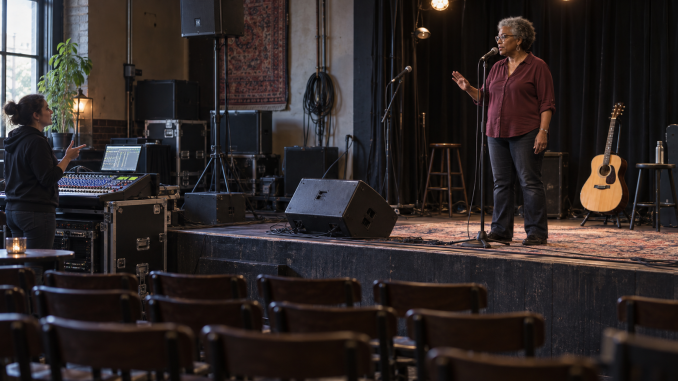
Prepare for soundcheck by arriving with working equipment, knowing which short musical passages will test your setup, and agreeing on one person to communicate with the engineer. During the check, play when asked, listen when someone else is being checked, and describe the specific problem you hear.
The useful result is confidence that the performance can happen. You aren't there to prove how good the band sounds when everyone plays at once. You're there to uncover what would make the show difficult while there's still time to address it.
Choose the passage that tells the truth
A soundcheck song should expose the important parts of your show. If your set includes a quiet vocal, a dense chorus, and a keyboard change, identify short sections that demonstrate those demands. You may not get time for a whole song.
Tell the engineer about the meaningful extremes. A restrained verse doesn't tell them what your loudest vocal will do, and a guitar played gently while levels are set doesn't represent the way you'll hit it during the show. Perform the requested passage at a realistic level without deliberately exaggerating it.
This is where your live setlist becomes useful preparation. Look for the moments where the arrangement, instrument, or performer role changes, then decide which of those need checking.
Let the engineer finish a question
When the crew is checking one source, the other musicians should stay quiet unless asked to play. Otherwise the engineer is trying to identify a problem while everyone adds new information.
The order belongs to the person running the system. Follow it. If there's something essential they haven't reached yet, make a note and bring it up at a natural pause. Cooperation isn't passivity; it's making your information usable.
Yamaha's guide to a smooth soundcheck explains the value of preparation and clear communication between the engineer and performers. For the musician, that means knowing what you need to report before the room becomes busy.
Ask for what would help you perform
“I can't hear anything” gives the engineer very little to work with. Try “I need more of my vocal in this monitor so I can hear the ends of phrases,” or “The keyboard is masking the vocal here.” Identify your position and the source you're struggling with.
More volume isn't the only possible response. The engineer may need to change balance, placement, or something else in the system. Explain the performance difficulty and let the crew work through the technical solution. Don't alter house equipment, protective settings, or routing yourself.
If the sound is painfully loud or something seems unsafe, stop and tell the crew. A performance check isn't a reason to endure pain or improvise electrical repairs.
Once the individual checks are complete, play together if time permits and check whether you can still hear the cues you need. A monitor balance that seemed fine alone may feel different inside the arrangement.
Keep the useful setup useful
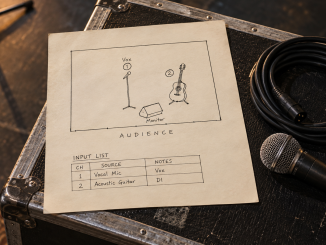
After soundcheck, avoid casual changes to output levels or equipment positions. If a change is necessary, tell the engineer. Check the files you're supplying too, particularly if playback versions or backing tracks are involved.
For a rushed changeover, ask the crew which checks are possible and agree on priorities. Some shows offer only a brief line check rather than a full musical soundcheck. You can still arrive prepared, communicate clearly, and identify the cues you must hear.
Before leaving the stage, make sure each musician can answer one practical question: “Do I know what I'll listen for when the first song starts?” That's a better finish than filling every remaining minute with another chorus.


Be the first to comment