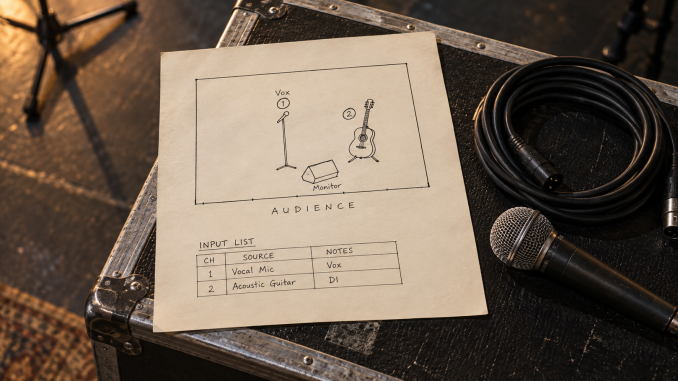
A stage plot shows where you and your equipment belong onstage. An input list shows what needs to reach the sound system. To make both useful, describe the show you're actually bringing, identify who supplies each important piece of equipment, and confirm the plan with the venue before you arrive.
You don't need to make the document look like a major tour's paperwork. You need to make it possible for someone who hasn't met you to prepare for your performance. That's the standard to work toward.
Start with the show, then draw it
Set out your normal performance setup, or walk through it with the musicians involved. List everyone who performs, the instruments they use, and any changes during the set. A singer who also plays acoustic guitar needs a different plan from a singer who brings only a microphone.
Draw a simple rectangle for the stage and label the audience edge. Add each performer by name and instrument. Mark the positions of amplifiers, keyboards, drums, vocal microphones, and requested monitors. Label the viewpoint explicitly so nobody has to guess what your left and right mean.
Give the document an artist name, contact, revision date, and show date where known. Those details are small until two versions reach the same engineer. Then they matter a great deal.
Follow each sound to its connection
Your input list is a separate list of the audio sources the engineer will receive. Number the rows and describe each source clearly. Include the proposed microphone or direct connection where you know it, and mark anything that needs confirmation.
For a simple singer-guitarist show, that might mean one vocal microphone and one acoustic-guitar connection. A keyboard setup may send one or two outputs; don't call it stereo merely because the instrument has two sockets. Decide what you actually use and confirm the receiving arrangement with the engineer.
Add backing vocals, playback, and instrument changes if they're part of the performance. If something must be heard only by the musicians, say so explicitly and let the engineer confirm the routing. Don't leave an important distinction buried in a message sent several weeks earlier.
Yamaha's soundcheck preparation guidance treats the input list as advance preparation for the engineer. Your contribution is accurate information; the house crew may adapt channel numbering and equipment choices to their system.
A request isn't a confirmed provision
Next to the plan, state what you bring and what you need supplied. Include stands, microphones, direct boxes, backline, and relevant playback equipment. Keep electrical and system-design questions with the venue's qualified crew.
If you need a keyboard stand, write it down. If you bring it, write that down too. A beautifully drawn piano symbol doesn't tell anyone whether a keyboard is arriving with you.
Send the plot and input list together using the venue's requested format and deadline. Ask the contact to identify anything they can't provide. Until that conversation happens, you have a request, not a settled arrangement.
Your electronic press kit can hold the current technical documents, but send the exact show version when advancing a booking. Keep an older setup out of the download path once the lineup changes.
Before sending, trace the performance one more time: each person has a place, each audible source has an entry, each essential item has an owner, and each uncertainty has a question. That gives the crew something they can use, and gives you a much calmer arrival.



Be the first to comment